
Event Description
GAUC CLIMATE × LEADERSHIP 2026 PROGRAMME · PRACTICAL MODULE (YOUTH PIONEER) · EVENT A
LaLD Laboratory · University of Kara
Activity Report — Lecture and Panel Discussion
“Reinhabiting the World: What Narratives from the Global South Teach Us about Climate Adaptation”
Agora 21 janvier 2004, University of Kara · Monday 19 October 2026
Activity Details
Title Reinhabiting the World: What Narratives from the Global South Teach Us about Climate Adaptation
Type Interdisciplinary lecture and discussion (presentation + panel discussion)
Date / Time Monday 19 October 2026 — 15:15–17:30 GMT
Venue Agora 21 janvier 2004, University of Kara
City / Country Kara / Togo
Format / Language In person / French
Audience Academic staff and students from different disciplines
GAUC Topic Climate adaptation × knowledge and narratives from the Global South (ecocriticism, gender, education)
Framework GAUC Climate × Leadership 2026 Programme (Tsinghua / UNESCO / UNITAR)
Organiser LaLD Laboratory — University of Kara
Session Leadership Speaker: Dr AGBESSI Akpéné Délalom (Assistant Professor, Modern literature) · Moderator: Dr TCHAO Essotorom (Associate Professor, Modern literature)
Panellists Dr ADI Tchilabalo (Associate Professor, Anglophone studies) · Dr PANESSE Paalamwé (Assistant Professor, Rural geography and planning) · Dr AKPAKI Ogouvidé (Associate Professor, Chemistry and environment) · Dr TCHENDO Yao (Associate Professor, Modern literature)
Participation
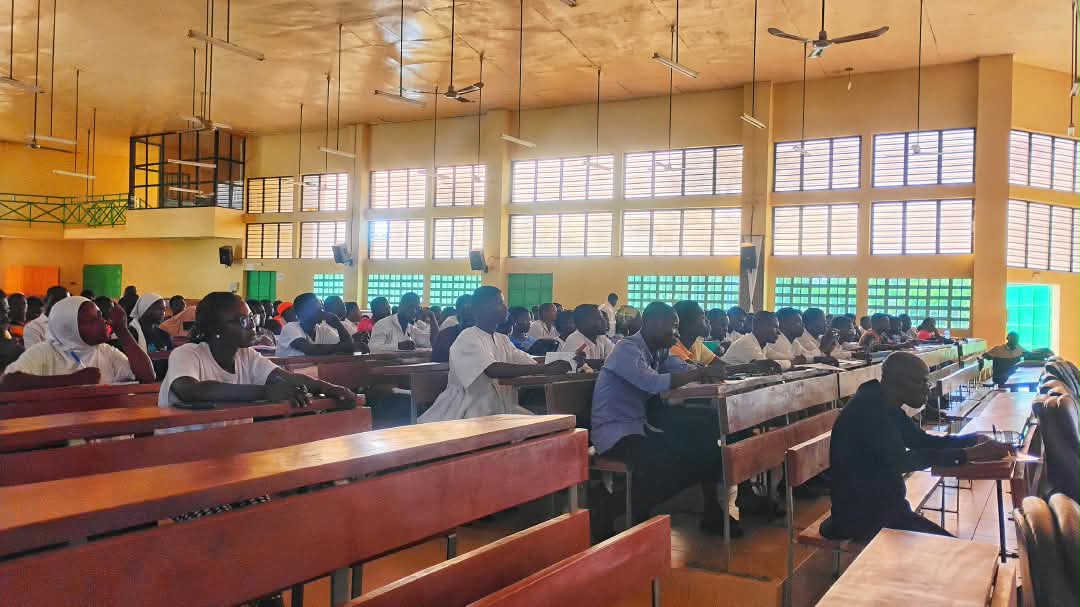
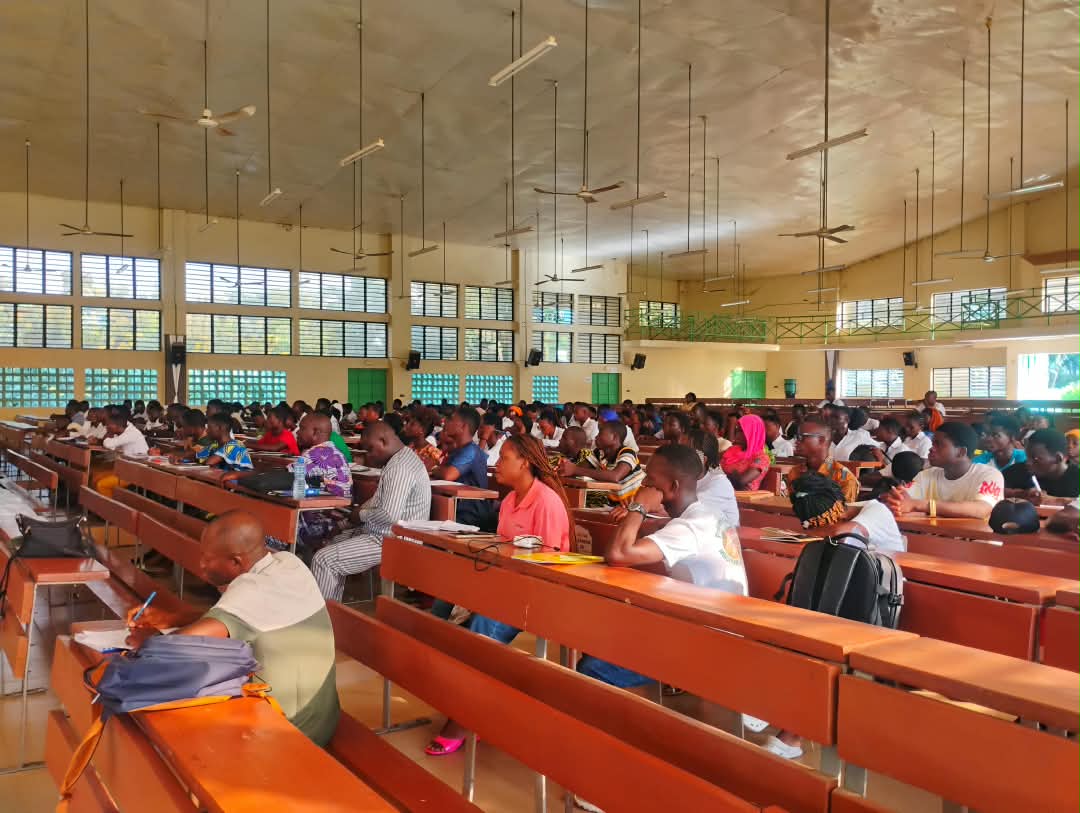
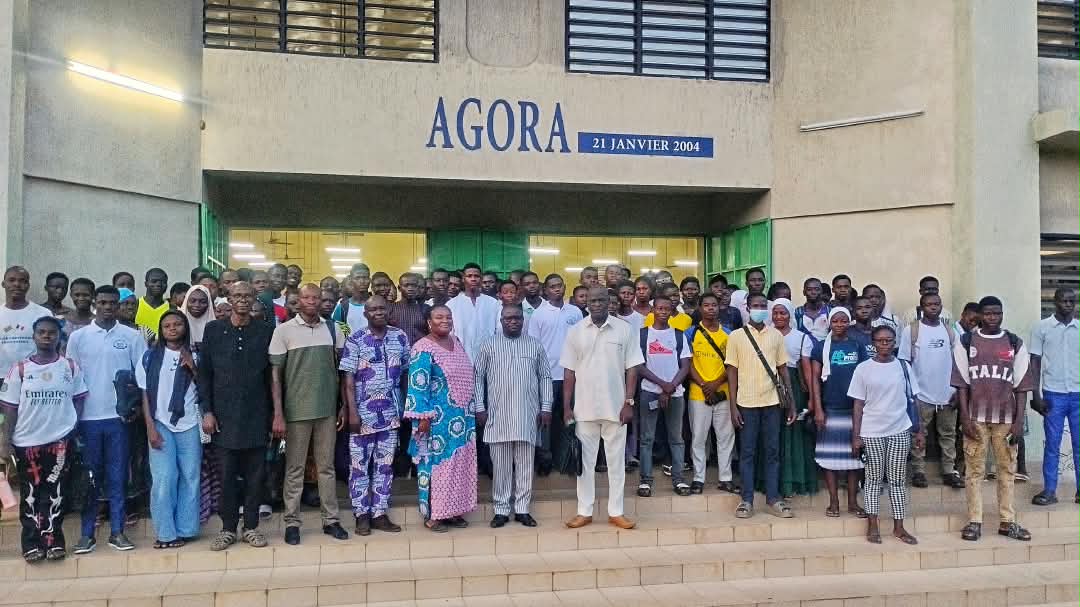
Total participants: 204 (based on the attendance register — 11 sheets)
A breakdown by sex is unavailable: the university’s attendance template did not include a “Sex” column, so a reliable female/male breakdown cannot be established. Combined with the school session (170 participants), total participation in the module reached ≈ 374, well above the minimum of 100 required for Youth Pioneer certification.
1. Opening Session
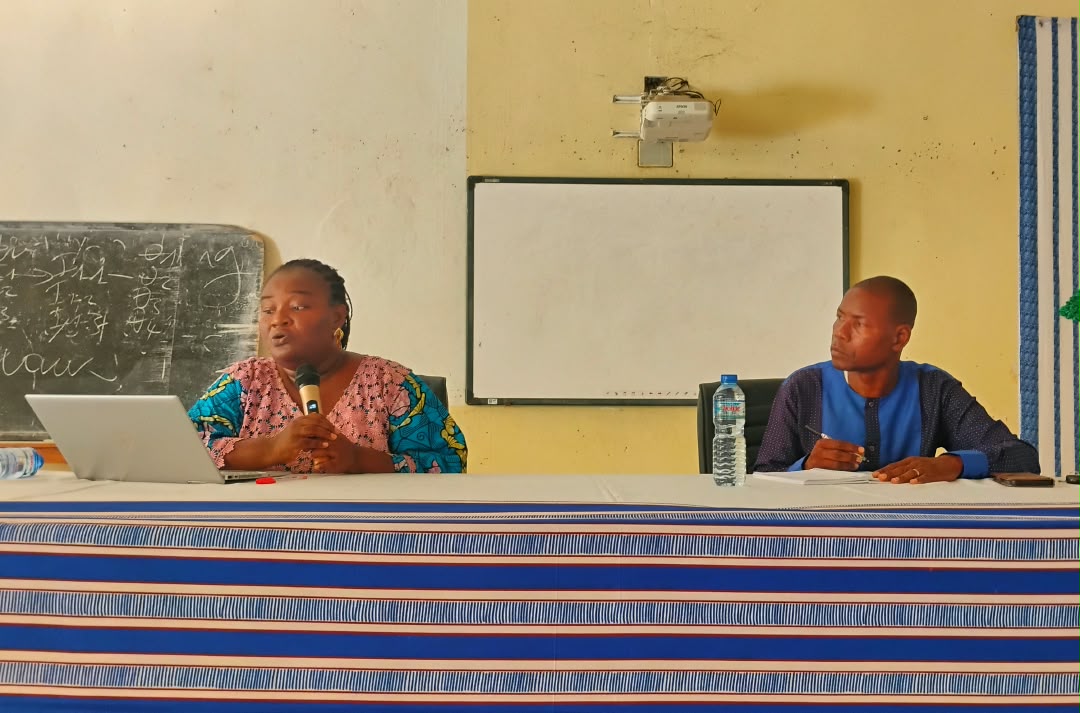
On Monday 19th October 2026, the University of Kara hosted an interdisciplinary conference and discussion at the Agora 21 janvier 2004 on the theme “Reinhabiting the World: What Narratives from the Global South Teach Us about Climate Adaptation”. The event brought together academic staff and students from different disciplines. Dr BOROZI Lakaza (MC) opened the session and introduced the speaker and moderator. The lecture began at 15:15.
Moderator’s Opening Remarks (Dr TCHAO Essotorom, MC)
The session was led by the speaker, Dr AGBESSI Akpéné Délalom (Assistant Professor), and the moderator, Dr TCHAO Essotorom (Associate Professor). After welcoming the audience, the moderator introduced Dr AGBESSI as a lecturer and researcher in the Department of Modern Literature at the University of Kara, the author of several academic articles, supervisor of more than eight master’s dissertations, and President of APEJELF.
2. Presentation by Dr AGBESSI
The speaker opened with a quotation from the Baobab, a character in En compagnie des hommes by Véronique Tadjo: “The earth is a story we have not yet finished telling.” She saw this as an expression of a worldview that does not place humans at its centre, characteristic of narratives from the Global South, and posed a central question: how does the way we tell stories about the world shape the way we inhabit it? She argued that the climate crisis concerns not only carbon and temperature, but is also a crisis of narrative and of the ways we have learned to understand nature. Her analysis followed a chain of mediation (perceive → conceptualise → narrate → adapt), drawing on phenomenology (Merleau-Ponty), narrative hermeneutics (Ricœur), and the anthropology of living beings (Descola).
Two hypotheses framed the presentation: if narratives from the Global South understand humans as inseparable from the living world, they contain distinctive resources for adaptation; and if the dominant framework treats nature as a separate resource, it is structurally unable to recognise those resources. The speaker then defined three concepts: inhabiting / reinhabiting (following Heidegger: building a meaningful relationship with one’s surroundings by naming them, telling their stories, and caring for them); the Global South (a position within power relations rather than a location on a map — Santos, Mbembe); and climate adaptation (living with impacts already being felt, such as droughts and floods, as distinct from mitigation; the Global South has contributed least to the causes but bears the greatest consequences).
Part 1 — To Name Is to Inhabit
The nature/culture divide is far from universal: Philippe Descola describes it as a recent invention of the modern Western world. Souleymane Bachir Diagne offers an alternative, viewing humans not as owners but as custodians of the earth — “becoming human together and inhabiting the earth together”, in the spirit of Ubuntu. Tales and narratives from the Global South already embody this perspective: a tree has a name, a river has a will, and an animal is kin. Tadjo extends this view by giving voice to the Baobab, the Bat, and the Forest, alongside writers such as Yanick Lahens, Hemley Boum, and Théo Ananissoh.
Part 2 — What Narratives from the Global South Already Know
Our literary traditions preserve detailed accounts of ways of working the land that offer lessons for adaptation today: collective labour (the harvest in Camara Laye’s L'Enfant noir; the coumbite in Jacques Roumain’s Gouverneurs de la rosée); treating the land as a partner rather than a stock of resources (Nazi Boni, Achebe); crop diversity rather than monoculture (fonio, cowpeas, millet, sorghum); and adaptation to drought (Bessie Head, Charles Mungoshi, Roumain). This knowledge, largely sustained by women, anticipates what science is confirming today.
Part 3 — Reversing the Flow of Knowledge
Why does this knowledge carry so little weight in major decisions? The speaker returned to the traditional healer in En compagnie des hommes: initially dismissed, he proves indispensable in caring for people with Ebola. The novel thus exposes the dismissal of others’ knowledge — what Felwine Sarr, drawing on Rajeev Bhargava, calls “epistemic injustice”, and what Boaventura de Sousa Santos calls “epistemicide”. Drawing on Sarr’s Afrotopia, the speaker stressed that domination is first and foremost a matter of narrative and called for the dominant imagination to be “dislodged” and for a move beyond “quantophrenic bias”, or excessive reliance on numbers. The figures illustrate this imbalance: the vast majority of climate commitments in the Global South prioritise adaptation, while most international funding goes to mitigation. She therefore called for dialogue between science and local knowledge, rather than treating them as opposing systems.
In conclusion, the speaker proposed three actions in response to the question “What can we do about climate change?”: listen to and collect stories and proverbs; pass on and share this knowledge; and become builders of a project we may not live to see completed. As Wangari Maathai reminds us, “we are called to care for the earth wherever we are.” The presentation ended at 15:57, after which the moderator reiterated these actions.
3. Panel Discussion
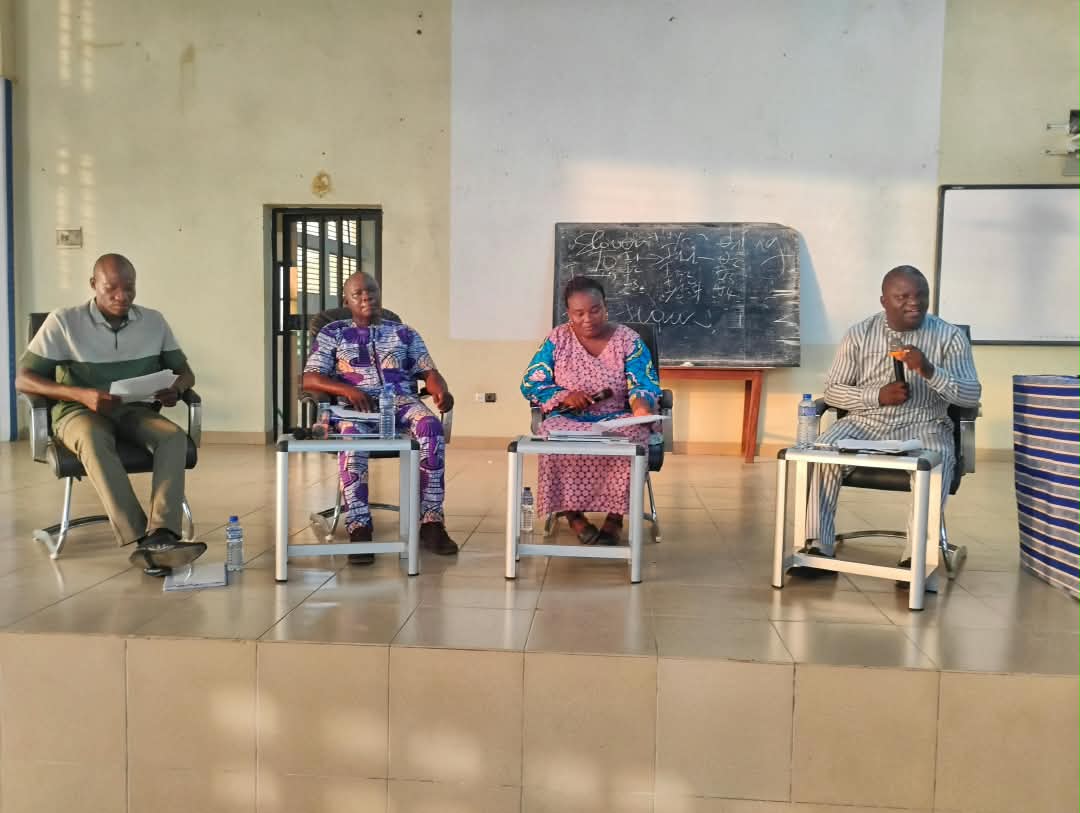
Moderated by Dr AGBESSI, the panel brought together Dr ADI Tchilabalo (Anglophone studies), Dr PANESSE Paalamwé (rural geography and planning), Dr AKPAKI Ogouvidé (chemistry and environment), and Dr TCHENDO Yao (modern literature). Their main contributions were:
● Dr AKPAKI (connecting scientific and literary knowledge): addressing local constraints, analysing soils to restore fertility, developing local processes, recovering value from waste, and taking action on water and air issues to find sustainable solutions.
● Dr ADI (adaptation in Anglophone studies): renewing themes and narratives, exploring new approaches (ecopoetics and ecojustice), and restoring the political dimension of narrative.
● Dr PANESSE (adapting to climate change): placing people, with their scientific and cultural knowledge, at the centre; adaptation requires changes to land-use planning and ways of life.
● Dr AKPAKI (climate pressures): gases and radiation; warming drives climate change, which affects air quality, soils, and water.
● Dr PANESSE (measurement approaches): measurement should reflect local contexts (possibilism) and build on traditional methods.
● Dr ADI: most literary studies have paid limited attention to the environment.
● Dr TCHENDO: using a traditional tale, he showed how oral literature can contribute to thinking about climate change.
4. Audience Discussion
The discussion addressed whether anticipation can contribute to climate adaptation, as well as environmental issues and their adverse consequences.
● “A fictional character is not a medical prescription” (Dr ADI).
● Oral literature can offer valuable insights into the environment (Dr TCHENDO).
● Anticipation is part of climate adaptation (Dr PANESSE).
● Everyone has a responsibility to protect the environment; sustainable solutions must be found (Dr AKPAKI).
5. Closing
The event concluded with closing remarks followed by a group photograph at 17:30.
Prepared in Kara on 20th October 2026
Report prepared by
Dr Akpéné Délalom AGBESSI
Assistant Professor, University of Kara
President of APEJELF
Signature: ______________________ Approval and Stamp
LaLD Laboratory / University of Kara
Signature: ______________________